
The Spotted-Eagle Ray (Scientific name : Aetobatus Narinari), are found globally in tropical regions and can be frequently spotted in the waters around Bonaire. In Papiamentu they are referred to as “Chuchu Agila” and in Dutch “Arendskoprog”.
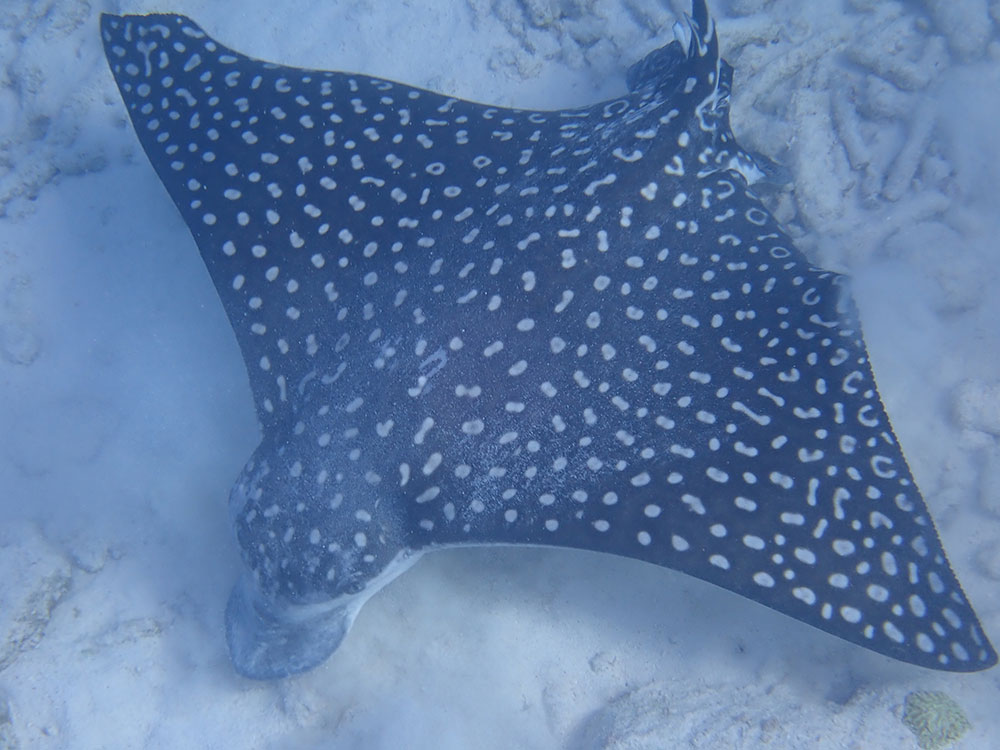
Spotted-Eagle Rays and Southern Stingrays are the two types of Rays that you will most frequently encounter around Bonaire. Their shape can be described as a wide pectoral disc like body attached with a long whip like tail. They have been measured at 16 feet long (5m), from head to the end of their tails and in width 8 feet (2.5m), weighing in at 230kg (507lb).
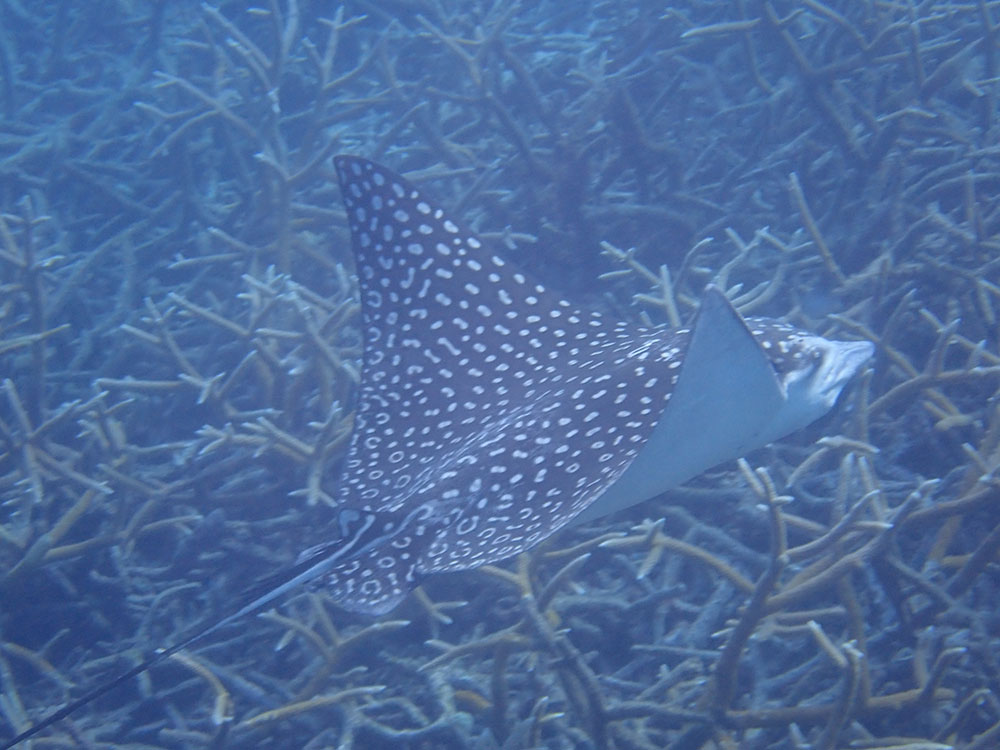
They have a dark color and are easily recognized by the light spots and rings that are scattered across their bodies. Just behind the pelvic fins are venomous barbed stingers, they are shy of divers and will keep their distance if approached but due to their venomous stingers can be considered as dangerous if caught. They have a preference for swimming near bays and reefs, most commonly seen alone but can on occasion be seen swimming in groups especially if they are crossing open waters.
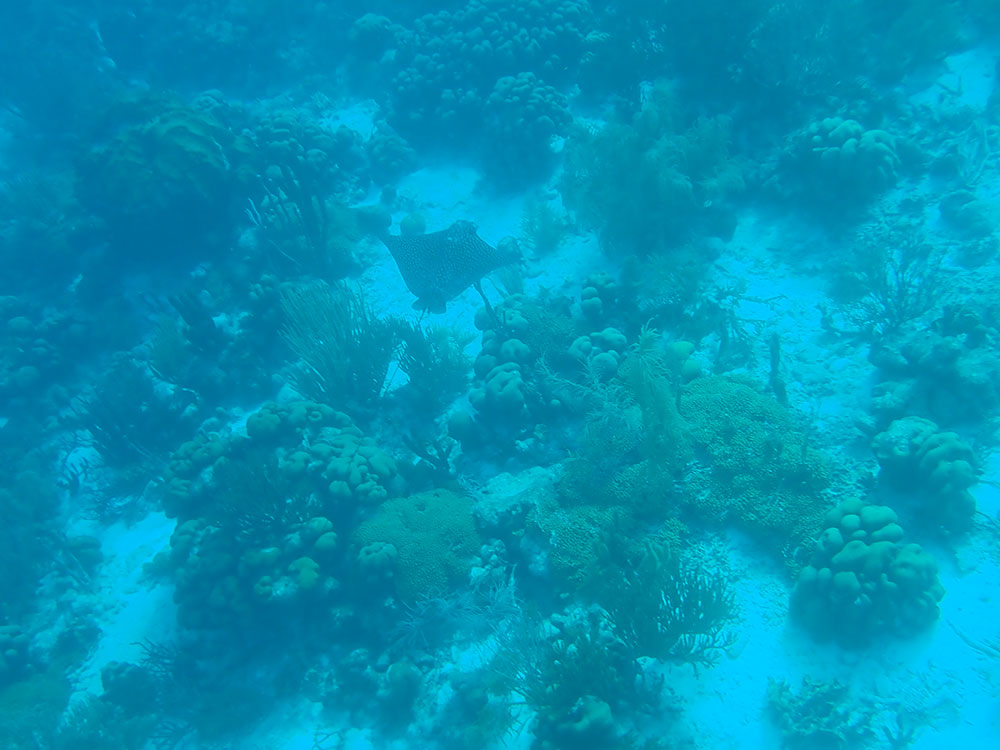
They feed on small fish and crustaceans and at times will dig into the sea bed sand with their snout scouring for food. They are not considered good food fish and don’t hold much importance to commercial fisheries. When caught it makes loud sounds and should be handled with caution due to it’s venomous stingers. They are popular in aquarium displays and are often seen public aquariums.
If you looking to spot Spotted Eagle Rays in Bonaire you can try dive sites like Tori’s reef, Invisibles, Captain Don’s reef and Joanna’s Sunchi. I managed to run into one when I was out at Bachelor’s Beach on a snorkel, so you may even get a pleasant surprise from another site! But the previously mentioned dive sites will give you the highest probability.