
The Yellow-shouldered Amazon parrot (Amazona barbadensis), affectionately known as “Lora” in Papiamentu, is one of Bonaire’s most famous birds next to the Flamingos. It is often confused with the Brown-Throated Parakeet which is very similar in appearance but smaller in size (Average of 25 cm) whereas the Yellow-Shouldered Amazon parrot is (35 cm) and has a shorter tail.
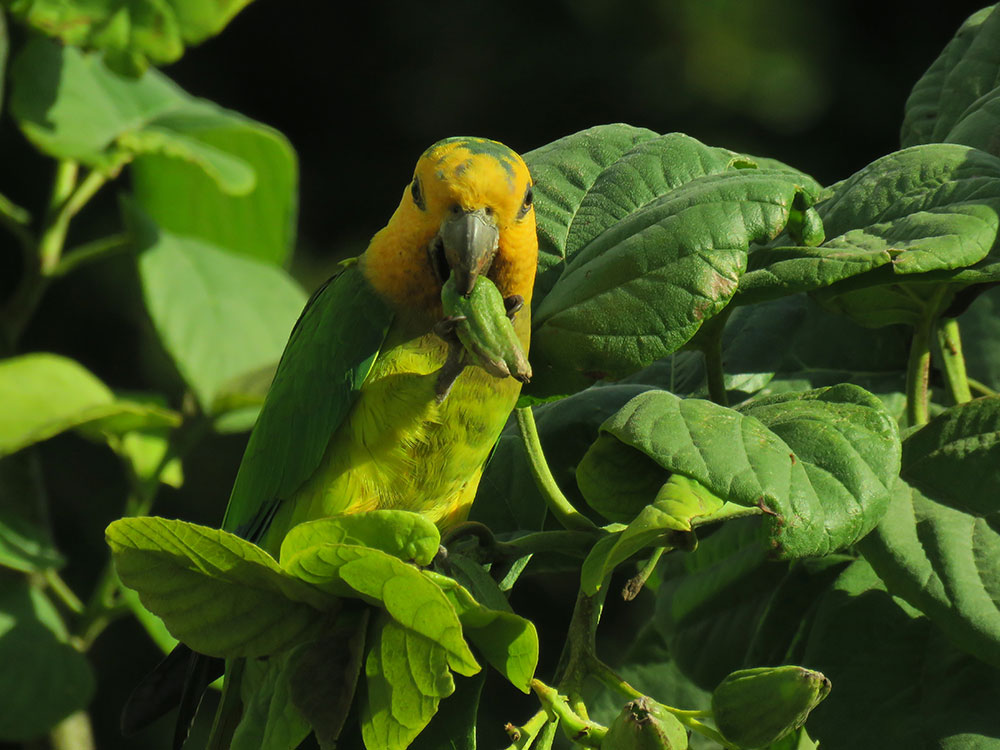
These parrots can only be found in Northern Venezuela, the two Venezuelan islands of Margarita and La Blanquilla, Curacao and a significant population of this distinctive parrot in Bonaire. There was a population in Aruba but they sadly became extinct. The parrots breed here on the island between the months of March and August. The nests are mostly built in a hollow in a cliff or a tree and the females lay an average of three eggs which requires a period of 26 to 28 days to incubate. A fascinating fact is that the parrots form long-term monogamous relationships with their breeding partners, which is not a usual trend seen in birds.
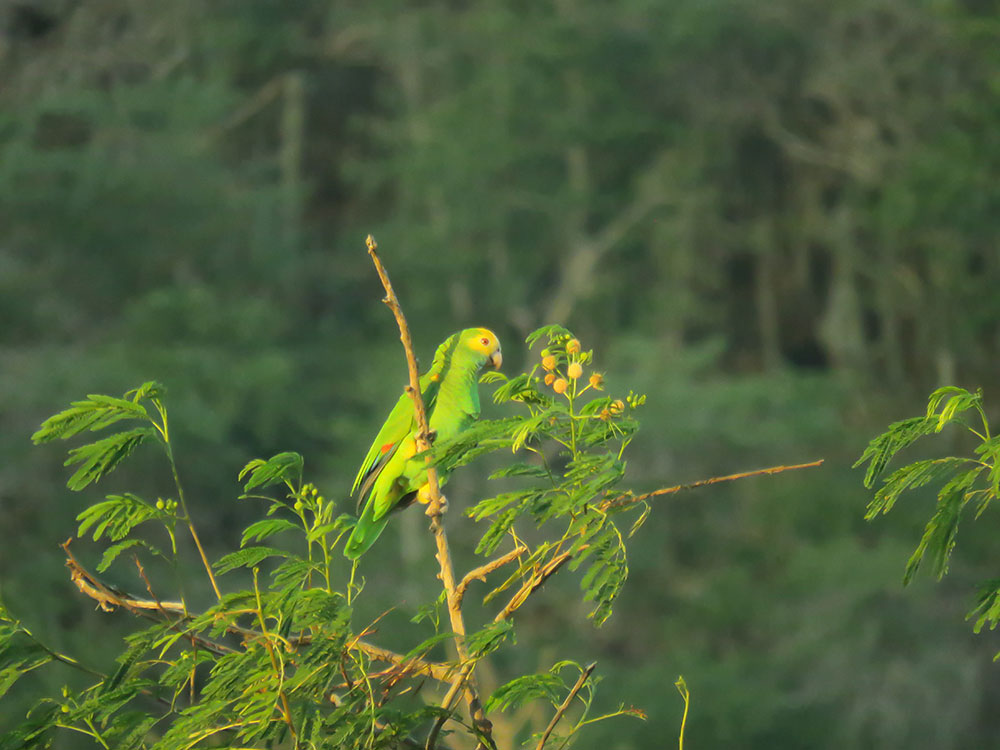
In terms of appearance the Yellow-Shouldered-Parrot have an average body size of (33-35 cm), it has a deep green plumage on its underbelly, also a characteristic feature to identify it with is the red and blue feathers on the ends of its wings, yellow head and yellow shoulders. You can find them in the North of Bonaire in the wooded areas and along the rocky slopes. Their key habitat in Bonaire is in Washington Slagbaai Park and around lake Goto. They can easily be heard by the loud screeching sounds they produce, but are fairly quiet during the day hiding in the shade of the trees.
Unfortunately during dry season life can be quite difficult for these parrots, as food and water can be scarce. Sadly in the 1970’s several hundred even starved of hunger! During dry season they try their luck at finding food outside of the wilderness and look in the gardens of the residents of the suburbs. They can be seen as pests by the owners of properties that house fruit trees which are often raided, they devour the fruits of the trees with the green-shelled, hard calabash fruit found in the local trees as a firm favorite.
Thankfully Bonaire and Echo have taken initiatives to protect and conserve this beautiful bird, as it’s both globally and locally endangered under threat of poachers who steal chicks from nests to sell illegally due to their demand as pets. Their habitats are also under pressure from both historic and present day deforestation by humans, goats and donkeys. Bonaire had a lot of historic deforestation which occurred in the early 1800s which it still has not recovered from.
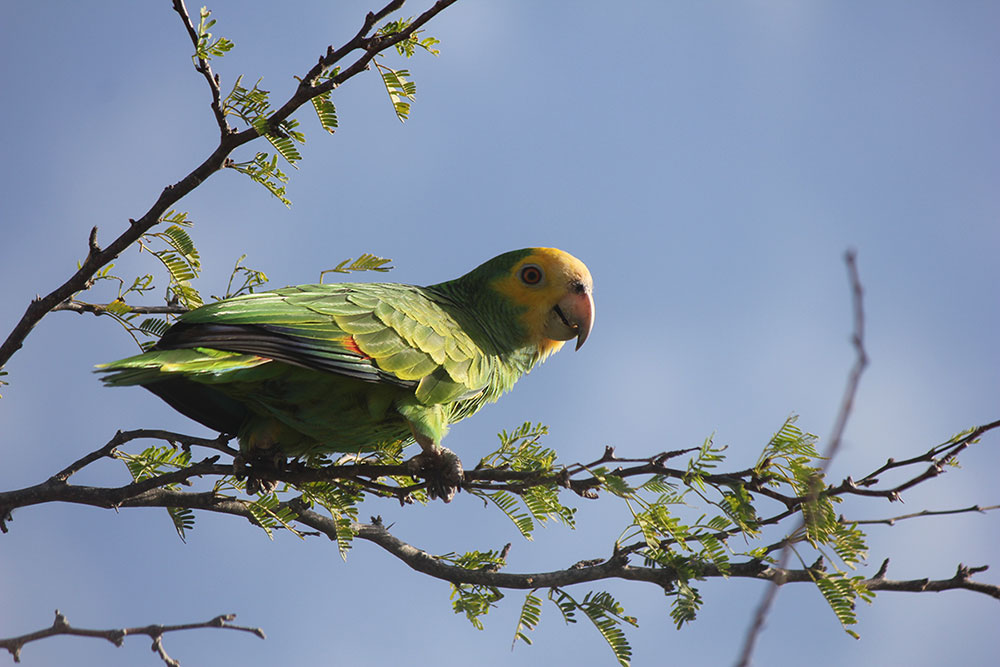
Luckily the conservation efforts on the island have been proving successful, a count in 2019 showed a dramatic increase in the number of Lora on the island. With the conservation group Echo stating that they counted 1153 in a simultaneous roost count which was the highest count in 24 years! Thanks to the efforts done by these conservationists, Bonaire is keeping this special bird alive and well in the heart of Bonaire!